
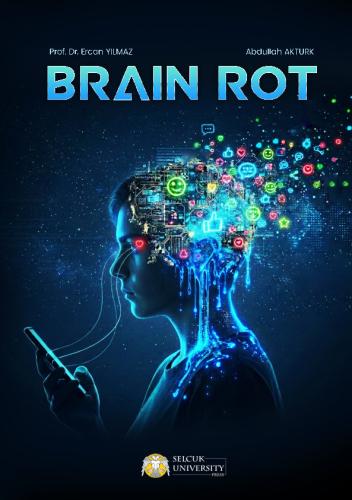
Brain Rot
Synopsis
In recent years, we have witnessed that almost every conversation with young people, teachers, and parents begins with the same phrase: “They can't focus like they used to.” Although this statement is often explained by concepts such as attention deficit, loss of motivation, or digital addiction, the picture observed in life points to a transformation that goes beyond these frameworks and is more complex and multidimensional. Today, the experience of young people is often described with an ironic but extremely striking concept: brainrot.
Rather than treating this concept, which emerged as a joke in popular culture, as a simple buzzword, this book is the product of an effort to understand the cognitive, emotional, and social changes it signifies from a social sciences perspective. In this study, brain rot is not treated as a medical diagnosis or an individual flaw; rather, it is approached as an analytical lens that reveals the effects of the digital age on learning, attention, and meaning-making.
In this book, brain rot is examined through the sub-dimensions of cognitive fatigue, cognitive load, emulation, and desensitization; the cognitive-emotional functional patterns shaped by young people's digital life practices are systematically investigated. To achieve this, comprehensive research was conducted on a sample of young people studying at high school and university levels across Turkey. The theoretical basis of the research and the findings obtained in the study are examined in detail in this work.
How to cite this book
License

This work is licensed under a Creative Commons Attribution-NonCommercial-ShareAlike 4.0 International License.
Published
ISBN
DOI
Categories
Copyright (c) 2026 Selcuk University Press