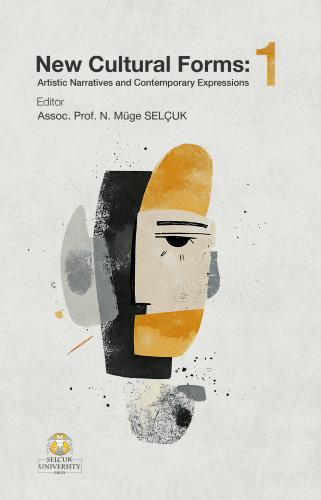
New Cultural Forms: Artistic Narratives and Contemporary Expressions-1
Synopsis
New Cultural Forms: Artistic Narratives and Contemporary Expressions-1 is an interdisciplinary study that explores the multilayered nature of contemporary art today. The book aims to reveal that artistic production is not only an aesthetic field of expression but also lies at the heart of social, cultural, and philosophical discussions. In this regard, it examines how art relates to consumer culture, social responsibility, gender, violence, play, and cultural dualities through various artists and theoretical perspectives.
This publication is the result of more than a year of collective discussions, interdisciplinary collaboration, and intensive intellectual effort devoted to art. Each author contributes a distinctive viewpoint within their discipline, helping to reconsider the limits of cultural production in our time. This collaborative spirit emphasizes that art is a space of meaning-making both on an individual and collective level.
The chapters in this book present in-depth readings that represent diverse aspects of contemporary art:
- Duygu Çetin, in her article Consumption Aesthetics and the Transformation of Art: An Analysis of Commodification through Pop Art and Andy Warhol, analyzes the aesthetic of commodification through the works of Andy Warhol.
- Engin Dumlupınar, in Traces of Play in Shirin Neshat’s Unveiling: A Reading Through Huizinga, interprets Neshat’s video through the concept of play, providing a new perspective on identity and artistic expression.
- Laçin Hazal Karadağ, in The Phenomenon of Violence in Marina Abramović’s Performances: Pushing the Boundaries in Art, explores the limits of violence and the body in Abramović’s performance art.
- Funda Salt, in Reading Gender Issues in Jenny Saville's Paintings, discusses the transformation of gender representation and the visibility of the female body in Saville’s paintings.
- Emre Şimşir, in The Social Function of Art: Humanity and Responsibility in the Photographs of Sebastião Salgado, examines Salgado’s photographs within the framework of ethics, humanity, and social responsibility.
- Melih Can Toygu, in The Contradiction in Ai Weiwei’s Art and the Cultural Approach through Yin–Yang Philosophy, interprets the contradictions in Ai Weiwei’s art through the philosophy of yin and yang, reflecting on the intersection of Eastern and Western cultures.
Together, these studies reveal the political, aesthetic, and ethical dimensions of contemporary art. When read collectively, they demonstrate that art is not only formal but also an intellectual and transformative force.
Art continues to possess the potential to speak truth, resist injustice, and remind us of the human essence in the modern world. Artists embody this potential with courage and persistence. This work, in turn, participates in that effort to reclaim the voice of art. The significance of this book lies in its comprehensive framework addressing the social function, political dimensions, and cultural role of art. Furthermore, its English-language format positions it as a multidimensional resource for international scholars, students, and readers working in the fields of art theory, cultural studies, and visual arts.
How to cite this book
License

This work is licensed under a Creative Commons Attribution-NonCommercial-ShareAlike 4.0 International License.
Published
ISBN
DOI
Categories
Copyright (c) 2025 Selcuk University Press