
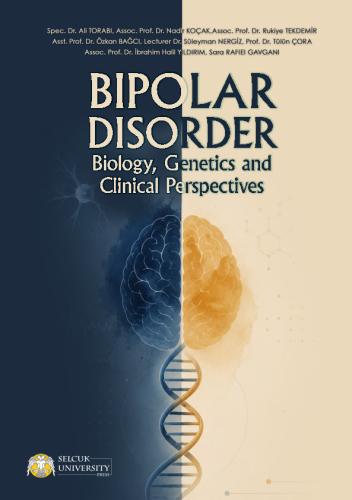
A Comprehensive Neuropsychogenetic Approach to Bipolar Disorder: Clinical, Neurobiological, Genetic, and Molecular Perspectives
Synopsis
Bipolar disorder is a complex, recurrent mood disorder with substantial neurobiological, genetic, and psychosocial dimensions. Despite its global prevalence of approximately 2.4% and its ranking among the leading causes of disability worldwide, bipolar disorder remains underdiagnosed, frequently misclassified, and inadequately understood at the mechanistic level. This monograph provides a comprehensive, evidence-based synthesis of current knowledge across the full spectrum of bipolar disorder research and clinical practice.
Organized into four thematic parts and twenty chapters, the work systematically addresses the historical conceptualization and diagnostic evolution of bipolar disorder; the neurobiological substrates including neuroanatomy, neurochemistry, circadian dysregulation, and neuroprogression; the genetic architecture encompassing heritability estimates, genome-wide association findings, candidate gene research, copy number variants, epigenetic mechanisms, and gene–environment interactions; and the translational dimensions including pharmacogenomics, biomarker development, and future research directions.
Drawing on findings from large-scale genome-wide association studies, structural and functional neuroimaging, epigenomics, and translational pharmacology, the monograph integrates these advances with clinical diagnostic frameworks (DSM-5 and ICD-11) and evidence-based therapeutic strategies. Special attention is given to emerging topics including polygenic risk scoring, the Research Domain Criteria framework, precision psychiatry, and the role of inflammatory and oxidative mechanisms in disease pathophysiology.
This work is intended for clinicians, researchers, and advanced graduate students in psychiatry, clinical genetics, neuroscience, and related biomedical disciplines. It reflects the research mission of NeuroPsyBiT (RTSGD NeuroPsychogenetic Bipolar Türkiye), operating under the Research and Treatment Society of Genetic Disorders (RTSGD).
How to cite this book
License

This work is licensed under a Creative Commons Attribution-NonCommercial-ShareAlike 4.0 International License.
Published
ISBN
DOI
Categories
Copyright (c) 2026 Selcuk University Press